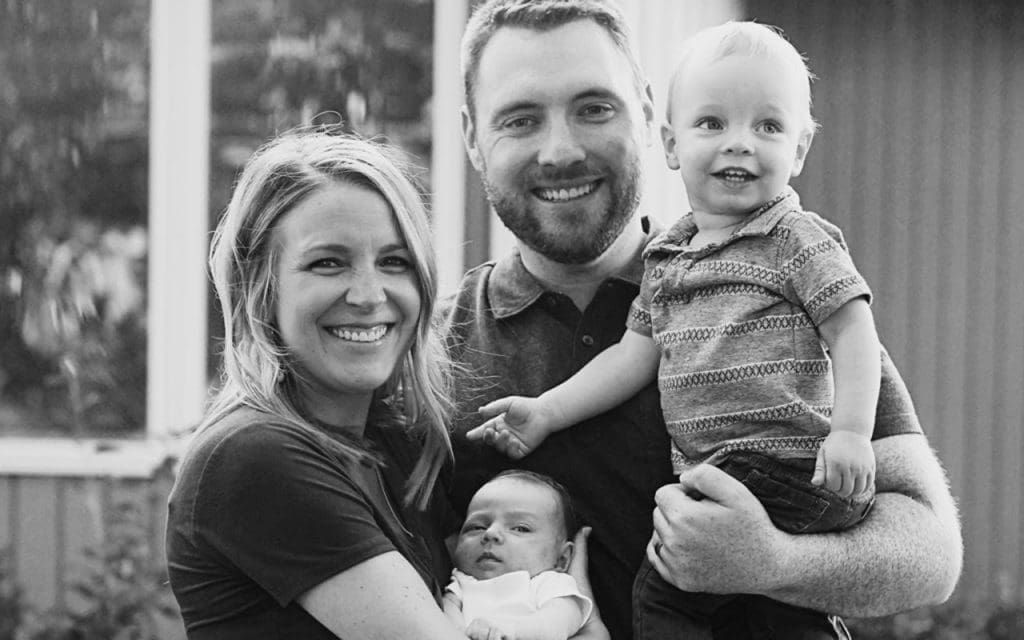
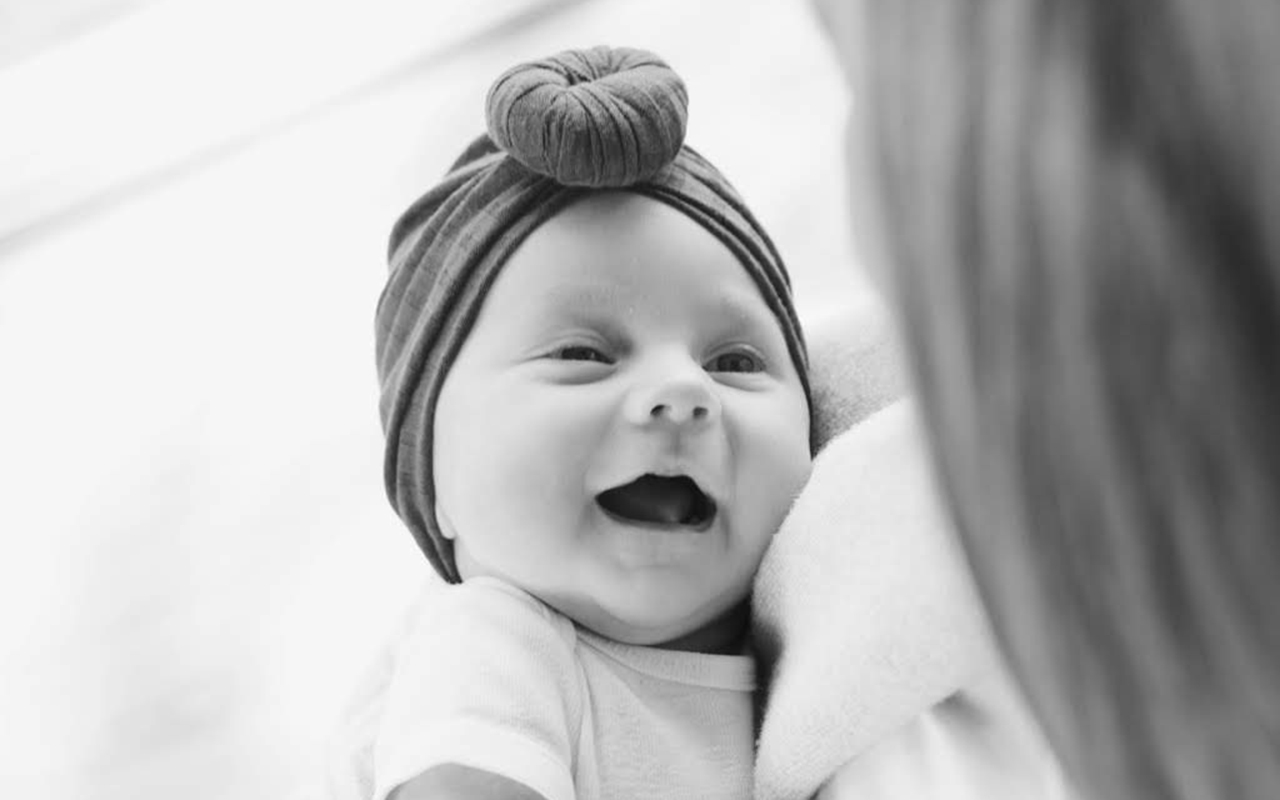
Lainey May Matuska entered the world with a bang on August 19th, 2018. She was perfect in every way, and we couldn’t wait to bring her home in a few days. We stayed in the NICU with our son Calvin for 16 days when he was born, so needless to say, we were excited to get in and out of the hospital with Lainey. Unfortunately, this wouldn’t be the case: 40 hours after Lainey was born, nurses burst into our room saying that Lainey was having a seizure in the nursery, and they expected it was due to an infection. They rushed Lainey down to the NICU and that was the beginning of the 5.5 month journey that led us to today.
In the NICU, all of Lainey’s lab tests came back normal. MRI, EEG, CT, spinal tap, blood work, etc. We noticed that Lainey had some abnormal eye movement in the hospital but our neonatologist said this was nystagmus and just to check with an ophthalmologist once we got home. It seemed benign enough to us and we all but forgot about it. After 14 days on antibiotics, we were finally given the ‘okay’ to head home and we were ecstatic to start our life at home as a family of four.
We had a few blissful weeks at home where everything seemed perfectly normal. Eventually, we noticed that Lainey seemed to be doing things that just seemed off. She continued to have abnormal eye movements, was very floppy with limited head control (at best) and when she was a couple of weeks old would start to have painful body stiffening episodes. We met with doctor after doctor who told us they had never seen this type of eye and body movement before, but that ‘babies do weird things and she’ll grow out of it.’ We were not going to take that for an answer, it didn’t feel right and it didn’t look right. We finally connected with a wonderful neurologist who started us down on a path of testing to try to get to the bottom of what was going on. That has included: 3 MRIs, 1 MIBG scan, 2 CT scans, 3 EEGs, metabolic testing, screening for neuroblastoma, etc. Again, everything came back normal. In December 2018, Lainey had a seizure at home and another seizure at Children’s Hopsital.
Now we were really scratching our heads. Was this related to the eye movement? Was this related to the low muscle tone? Are they all separate conditions happening at once? The only other test we had left was to do genetic testing to see if there was an underlying genetic condition. Our worst fears were realized when we got the call from the clinic that Lainey indeed has a genetic mutation.
Lainey has a mutation in the ATP1a3 gene and subsequently has been diagnosed with a devastating neurological disease called Alternating Hemiplegia of Childhood (AHC). The disease constitutes bouts of paralysis lasting minutes, to hours, to days. This paralysis will sometimes alternate from one side of the body to the other, other times it will affect the whole body and it also causes global cognitive and physical impairment/delay. Additionally, about 50% of children with this disease have epilepsy which is the case for Lainey. This disease is literally 1 in a million. LITERALLY. There are only 300 known cases in the United States.
There is currently no cure for this disease and there are limited medications available that have variable success in managing the painful and completely disruptive symptoms. BUT, there is HOPE! Cure AHC, AHC Foundation and Hope for Annabel have been working together on a gene therapy effort using Adeno Associated Virus (AAV) as a delivery system for functioning ATP1A3 to compensate for the mutated ATP1A3 associated with AHC. Gene therapy provides a path to a cure for AHC. A similar approach has already been successful in many diseases like Batten’s disease, Friedreich’s Ataxia, Huntington’s disease, Parkinson’s disease, Rett Syndrome, Multiple Sclerosis, Spinal Muscular Atrophy, and multiple retinal disorders. This is not only cutting-edge science, but also a proven, effective, and permanent fix of the genetic code.These organizations have raised close to $300,000 of the $500,000 needed for the next step in this process but we need your help in closing the gap to the next step towards a clinical trial.
Lainey’s future is incredibly uncertain and we aren’t willing to sit around and let this disease strip her of a full life. Please help us in making a donation to find a cure for this devastating disease.